Gatekeepers at the Margin: Scope-of-Practice Restrictions and the Manufactured Provider Shortage in America's Underserved Communities
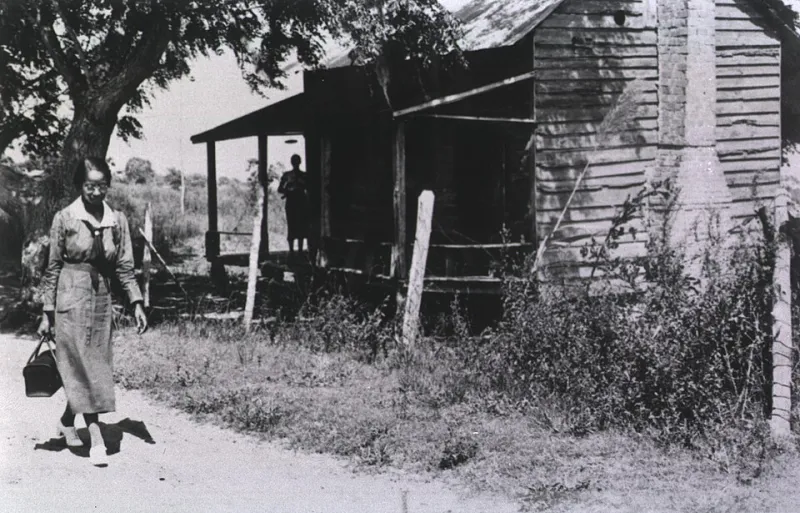
Photo: National Library of Medicine - History of Medicine, No restrictions, via Wikimedia Commons
In Benson County, North Dakota, a federally designated rural Health Professional Shortage Area, the nearest physician may be more than an hour's drive from a patient's home. The county has a nurse practitioner. She is qualified, experienced, and capable of managing the vast majority of primary care encounters that present in her community. Under North Dakota law, however, she cannot prescribe certain medications, authorize specific referrals, or operate a practice without a formal collaborative agreement with a supervising physician—an arrangement that, in a county without resident physicians, is extraordinarily difficult to establish and maintain.
This is not an anomaly. It is a structural feature of American health care licensure, replicated with variations across dozens of states, and it operates with particular severity in the communities least equipped to absorb its consequences.
The Scope-of-Practice Landscape
Scope-of-practice law in the United States is state-governed, producing a regulatory environment of considerable heterogeneity. The American Association of Nurse Practitioners classifies state practice environments into three broad categories: full practice authority, reduced practice, and restricted practice. As of the most recent legislative cycle, roughly half of states have granted nurse practitioners full practice authority—the right to evaluate, diagnose, and treat patients and to prescribe medications without physician oversight. The remaining states impose collaborative practice requirements, supervisory mandates, or both.
Physician assistant (PA) practice authority follows a similarly fragmented geography, though the profession has moved in recent years toward a "physician associate" model emphasizing team-based practice rather than supervision. Community health workers (CHWs)—a category encompassing promotoras, patient navigators, and lay health educators who serve as critical bridges between clinical systems and marginalized communities—face their own distinct credentialing barriers, with certification requirements and reimbursement eligibility varying dramatically across state lines.
The practical consequence of this variation is that a nurse practitioner practicing in New Mexico operates with clinical autonomy that her counterpart in Georgia does not possess. And because provider shortage areas are not uniformly distributed across the country, the states with the most restrictive scope-of-practice frameworks are not necessarily those with the most abundant physician supply.
The Evidence on Competence and Outcomes
The foundational justification for restrictive scope-of-practice regulations is patient safety—the argument that unsupervised advanced practice providers may deliver inferior care, miss complex diagnoses, or overprescribe. Decades of peer-reviewed research have consistently failed to substantiate this concern at the population level.
A landmark synthesis published in the New England Journal of Medicine and subsequent systematic reviews have found that nurse practitioners practicing with full autonomy produce patient outcomes—including rates of hospitalization, medication errors, and patient satisfaction—that are statistically comparable to those achieved by physicians in equivalent primary care settings. Research on PA practice has yielded similar findings. Studies examining CHW programs have documented meaningful improvements in chronic disease management, vaccination rates, and maternal health outcomes in underserved populations, often at substantially lower cost per patient than traditional clinical models.
The evidence base is not without limitations. Most studies are observational, confounding by patient case complexity is difficult to fully eliminate, and the populations served by advanced practice providers in autonomous settings may differ systematically from those seen in physician practices. Nevertheless, the weight of the literature does not support the contention that scope restrictions are necessary to protect patients from demonstrably inferior care.
Professional Protectionism and Its Discontents
If patient safety evidence does not explain the persistence of restrictive scope-of-practice regulation, what does? Health policy scholars have increasingly pointed to the organized influence of state and national physician associations in legislative processes as a significant explanatory factor. The American Medical Association and its state affiliates have historically opposed scope expansion for nurse practitioners and PAs, framing autonomous practice as a threat to care quality while simultaneously engaging in legislative advocacy that critics characterize as market protection.
This framing is not unique to medicine. Occupational licensing literature across multiple sectors has documented how incumbent practitioners use regulatory mechanisms to limit competition, often under the rhetorical cover of consumer protection. The Federal Trade Commission has, on several occasions, submitted comments to state legislatures urging caution about scope restrictions that appear to serve anticompetitive rather than safety-protective functions.
The distributional consequences of this dynamic fall disproportionately on communities that cannot attract physicians regardless of regulatory framework—rural counties, low-income urban neighborhoods, tribal lands, and border communities where economic conditions, infrastructure deficits, and geographic isolation make physician recruitment structurally improbable. For these communities, scope restrictions do not protect patients from inferior care; they protect patients from no care at all.
The Community Health Worker Dimension
The scope-of-practice debate has focused most heavily on nurse practitioners and PAs, but the credentialing barriers facing community health workers represent an equally consequential and less examined dimension of the problem. CHWs have demonstrated effectiveness in reaching populations that clinical systems routinely fail—undocumented immigrants, unhoused individuals, communities with deep historical mistrust of medical institutions. Their effectiveness is rooted precisely in their embeddedness within the communities they serve, not in formal clinical training.
Yet the movement toward formal CHW certification, while improving workforce consistency in some respects, has introduced new barriers to entry and narrowed the pool of eligible workers in communities where educational attainment is lower and certification costs are prohibitive. Reimbursement frameworks in Medicaid, which increasingly cover CHW services, vary so substantially across states that programs viable in one jurisdiction are financially unsustainable in another. The result is a workforce whose potential is systematically constrained by the administrative architecture surrounding it.
Policy Pathways and Political Obstacles
The policy remedies are not obscure. Federal legislation linking Medicaid reimbursement rates or rural health grant eligibility to state adoption of full practice authority has been proposed in various forms and has attracted bipartisan support in some congressional sessions. The Veterans Health Administration, which operates under federal rather than state scope-of-practice law, has granted nurse practitioners full practice authority system-wide, providing a large-scale natural experiment whose outcomes researchers continue to evaluate.
State-level action has proceeded in fits and starts, often accelerated by crisis. The COVID-19 pandemic prompted numerous states to issue emergency waivers expanding scope of practice for advanced practice providers, and several subsequently made those expansions permanent—a pattern suggesting that the primary obstacle to reform is political rather than evidentiary.
The communities waiting for these policy processes to resolve are not waiting in comfort. They are managing uncontrolled hypertension without consistent primary care, deferring cancer screenings because no provider exists within a reasonable distance, and delivering infants in emergency departments because obstetric access has collapsed. The licensing frameworks that constrain their access to care were not designed with them in mind. Reforming those frameworks will require confronting the professional and political interests that benefit from their continuity—a task that public health research can inform but cannot, on its own, accomplish.